Program
- Event
- Midtown, NYC
- Streaming
Upside-Down Love: A Conversation with Sari Bashi
The American Council for Judaism, Community Church of New York, Jewish Currents, Rabbis for Ceasefire and 15th Street Monthly Meeting (Quakers), invite you to an evening with author and human rights lawyer Sari Bashi, in conversation with Rabbi Andy Kahn, discussing her memoir Upside-Down Love.
Upside-Down Love tells the story of Sari and her partner Osama, a Palestinian professor originally from Gaza, and the life they have built together in the West Bank under the apartheid conditions of restricted movement, legal uncertainty, and enforced separation. The memoir speaks to the unique circumstances of this specific moment in history, while also illustrating a timeless truth: Love will triumph over bigotry and destruction.
Together, Sari Bashi and Rabbi Kahn will explore how personal story, law, and Jewish ethical frameworks can illuminate paths toward a more humane future.

The American Council for Judaism, Community Church of New York, Jewish Currents, 15th Street Monthly Meeting (Quakers), and Rabbis for Ceasefire invite you to an evening with author and human rights lawyer Sari Bashi, in conversation with Rabbi Andy Kahn, discussing her memoir Upside-Down Love.
Upside-Down Love tells the story of Sari and her partner Osama, a Palestinian professor originally from Gaza, and the life they have built together in the West Bank under the apartheid conditions of restricted movement, legal uncertainty, and enforced separation. The memoir speaks to the unique circumstances of this specific moment in history, while also illustrating a timeless truth: Love will triumph over bigotry and destruction.
Together, Sari Bashi and Rabbi Kahn will explore how personal story, law, and Jewish ethical frameworks can illuminate paths toward a more humane future.
Related Programming

- Event
- Streaming
Asunder! An Anthology of Jewish Anti-Zionist Fiction
Join ACJ board member Miriam Eisenstat and Author Aaron Kreuter for a conversation about Aaron’s new book Asunder. The first English-language anthology dedicated solely to Jewish anti-Zionist fiction, Asunder charts a new direction in Jewish literature as it takes a stand against the violent ethnic nationalisms that are currently destroying both Palestine and the world.
Learn More
- Event
- Streaming
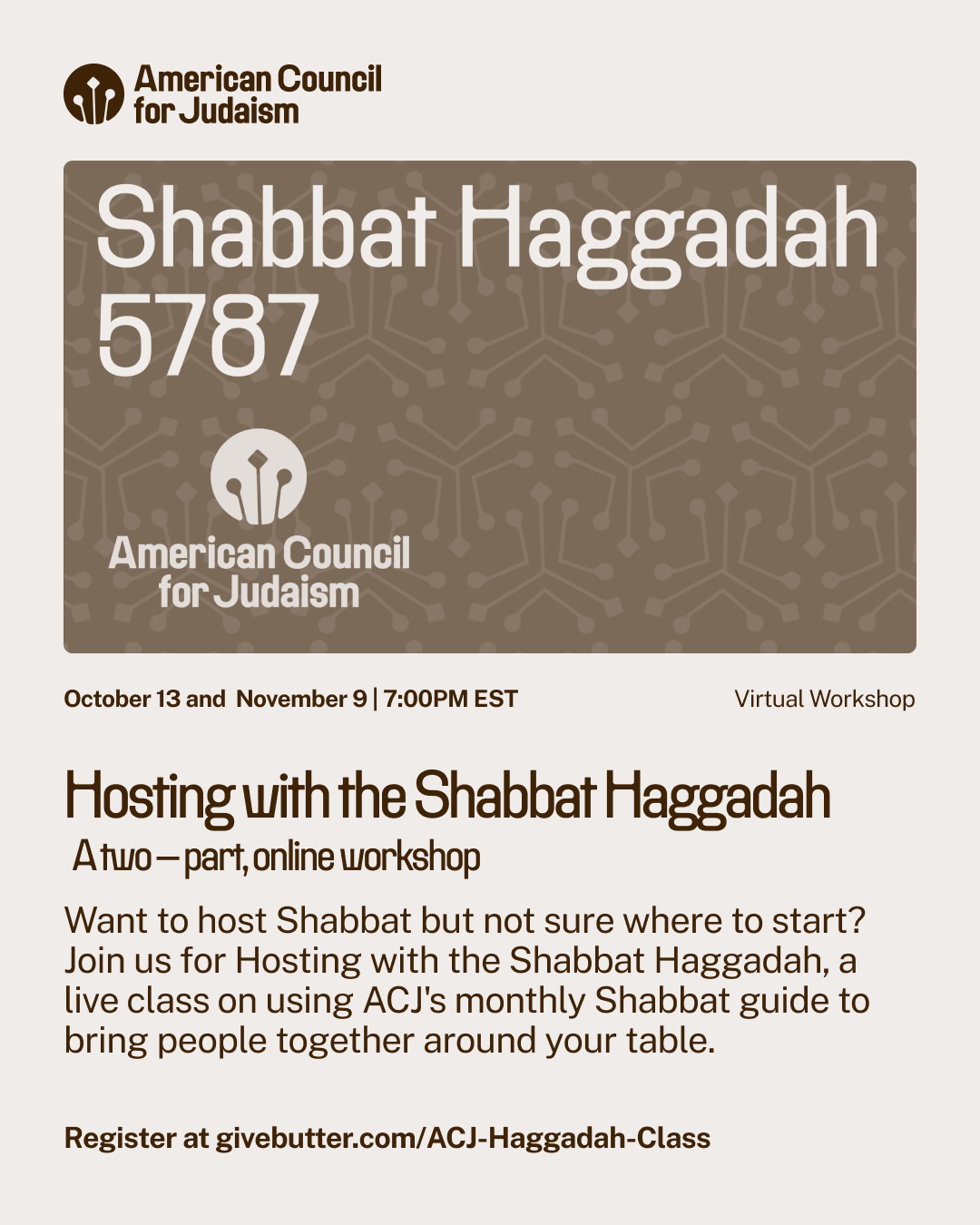
Hosting with the Shabbat Haggadah
Want to host Shabbat but not sure where to start?
Join us for Hosting with the Shabbat Haggadah, a live class on using ACJ's monthly Shabbat guide to bring people together around your table.
We'll walk through the blessings, talk through the questions hosts run into (What about the Hebrew? What if my guests have very different backgrounds? What if I'm the least experienced person there?), and help you plan your own Shabbat meal.
No experience or Hebrew required. You'll leave with a worksheet, a marked-up guide, and a plan.
Learn More
- Event
- Streaming
- Brooklyn, NY
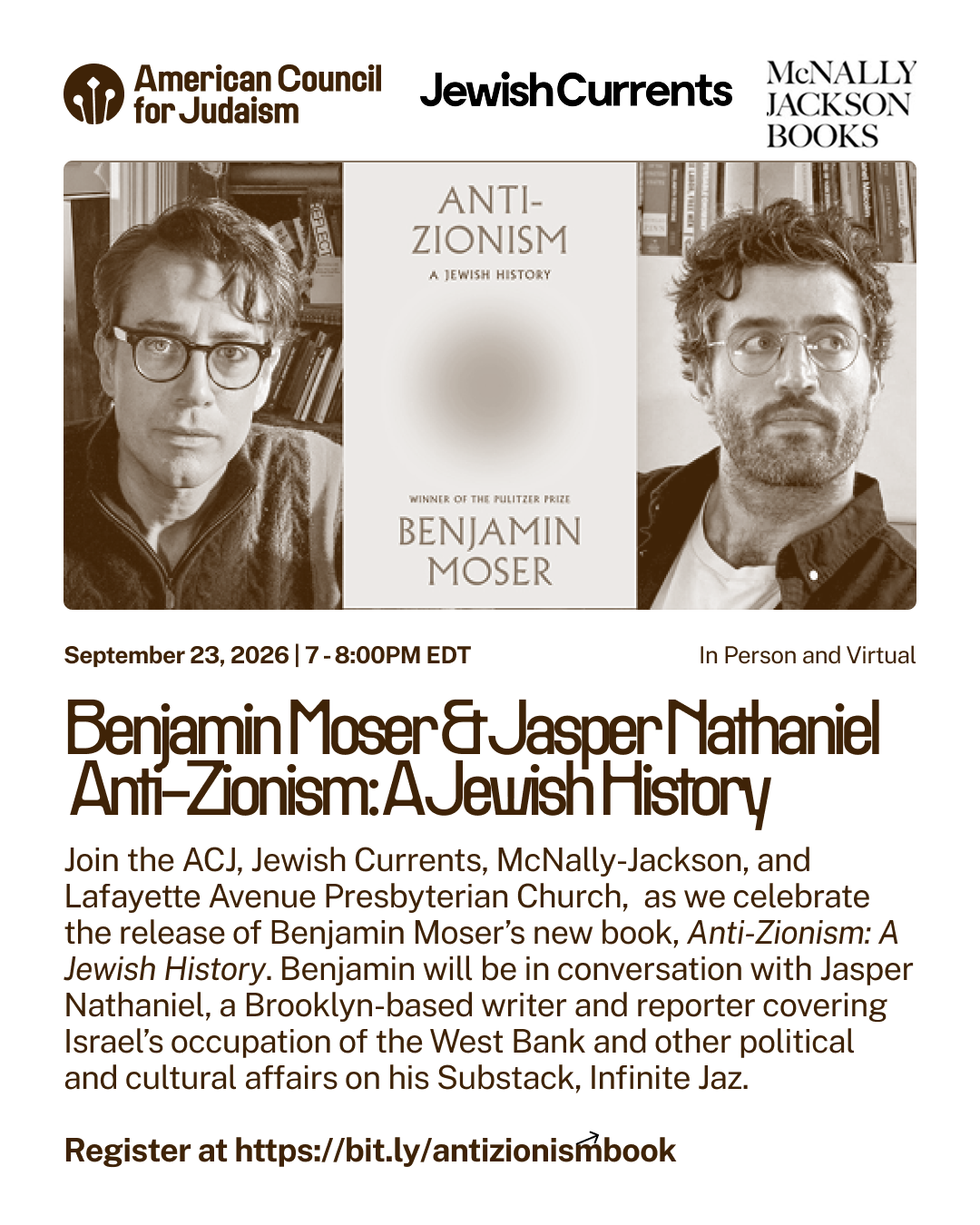
Anti-Zionism: A Jewish Tradition Book Release Event
Join us for the book release event, in partnership with Jewish Currents, McNally-Jackson, and Lafayette Avenue Presbyterian Church, of Anti-Zionism: A Jewish History by Benjamin Moser, in conversation with activist and writer Jasper Nathaniel. The two will discuss the history of Jewish Anti-Zionism, its current iterations, and what it means to actively involve yourself in this tradition today.
Learn More