Program
- Education Series
- Streaming
The Four Cubits: Building Your Own Jewish Practice
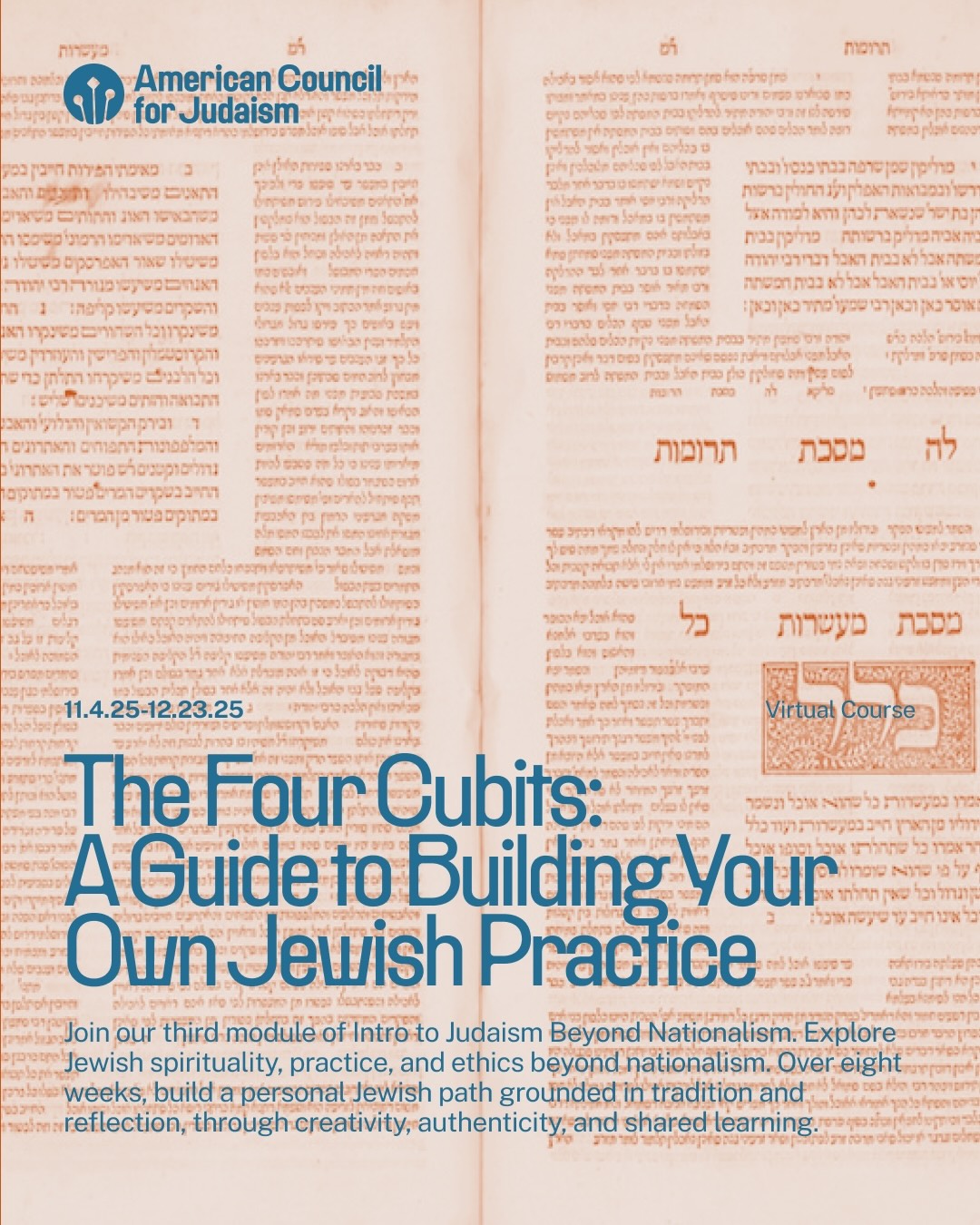
This 8-week guided journey is designed for those seeking to build a meaningful Jewish practice on their own terms. Grounded in the ACJ’s historic commitment to Judaism beyond nationalism, this course explores Jewish spirituality, practice, ethics.
Each week, we will engage with foundational Jewish practices while allowing space for personal interpretation, shared study, and integration. Participants will be encouraged to shape their own evolving Jewish path through intentional learning, reflection, and action.
Whether you are discovering Judaism for the first time or reclaiming traditions in a way that aligns with your values, this course provides a flexible and inclusive framework for deepening your Judaism.
An Introduction to Judaism Beyond Nationalism
Module 3: The Four Cubits: A Guide to Building your own Jewish Practice
Suggested Donation: $300
Summary:
This 8-week guided journey is designed for those seeking to build a meaningful Jewish practice on their own terms. Grounded in the ACJ’s historic commitment to Judaism beyond nationalism, this course explores Jewish spirituality, practice, ethics.
Each week, we will engage with foundational Jewish practices while allowing space for personal interpretation, shared study, and integration. Participants will be encouraged to shape their own evolving Jewish path through intentional learning, reflection, and action.
Whether you are discovering Judaism for the first time or reclaiming traditions in a way that aligns with your values, this course provides a flexible and inclusive framework for deepening your Judaism.
Week 1: Introduction to Neo-Halakhah
-
This opening session frames halakhah as “the way we walk,” a living and evolving language of Jewish practice and thought. Participants are introduced to core concepts, study models of halakhic reasoning, and encounter real teshuvot (responsa) on contemporary issues. The session closes with communal reflection, setting the foundation for a personal and communal journey over the coming weeks.
Week 2: Intentionality and Tools for Halakhic Exploration
-
Participants explore the sweep of Jewish textual history and learn how to navigate Sefaria to find classical, medieval, and modern sources. They begin using a Personal Halakhic Decision-Making Guide to shape their own Shabbat practice, grounding study in both tradition and personal experience.
Week 3: Shabbat
-
Through classical and contemporary texts, participants trace the evolution of Shabbat as a cornerstone of Jewish life. They refine their own Shabbat practice, explore tensions between rest, law, and community, and commit to experimenting with lived ritual over the week.
Week 4: Prayer
-
Focusing on Jewish prayer as an evolving communal technology, participants study sources from the Bible, rabbinic literature, and modern thinkers. They examine how their own prayer or meditation practices intersect with tradition and prepare to deepen their personal approaches.
Week 5: Torah and Wisdom
-
This session reframes Torah as an ongoing conversation rather than a fixed text. Participants encounter classical sources and modern poetry, selecting texts that resonate personally and exploring how engagement with Torah can shape their Jewish paths.
Week 6: Jewish Ethical Living
-
Participants explore mitzvot as a framework for ethical action in daily life. Through text study and personal reflection, they identify and commit to integrating one mitzvah or ethical practice—such as tzedakah, justice work, or kindness—into their lived practice.
Week 7: Food
-
Drawing from traditional sources and eco-kashrut teachings, participants examine Jewish food practices and their spiritual and cultural meanings. They apply halakhic reflection to their own food choices, experiment with a practice during the week, and reflect on the experience.
Week 8: Sharing Our Jewish Lives
-
In the final session, participants present their completed Halakhic Guide Sheets and personal practice plans, reflecting on how their understanding of halakhah has evolved. The session emphasizes halakhah as a lifelong, communal, and adaptable framework, and supports participants in identifying concrete next steps for continued learning and practice.
Related Programming
- Education Series
- Streaming
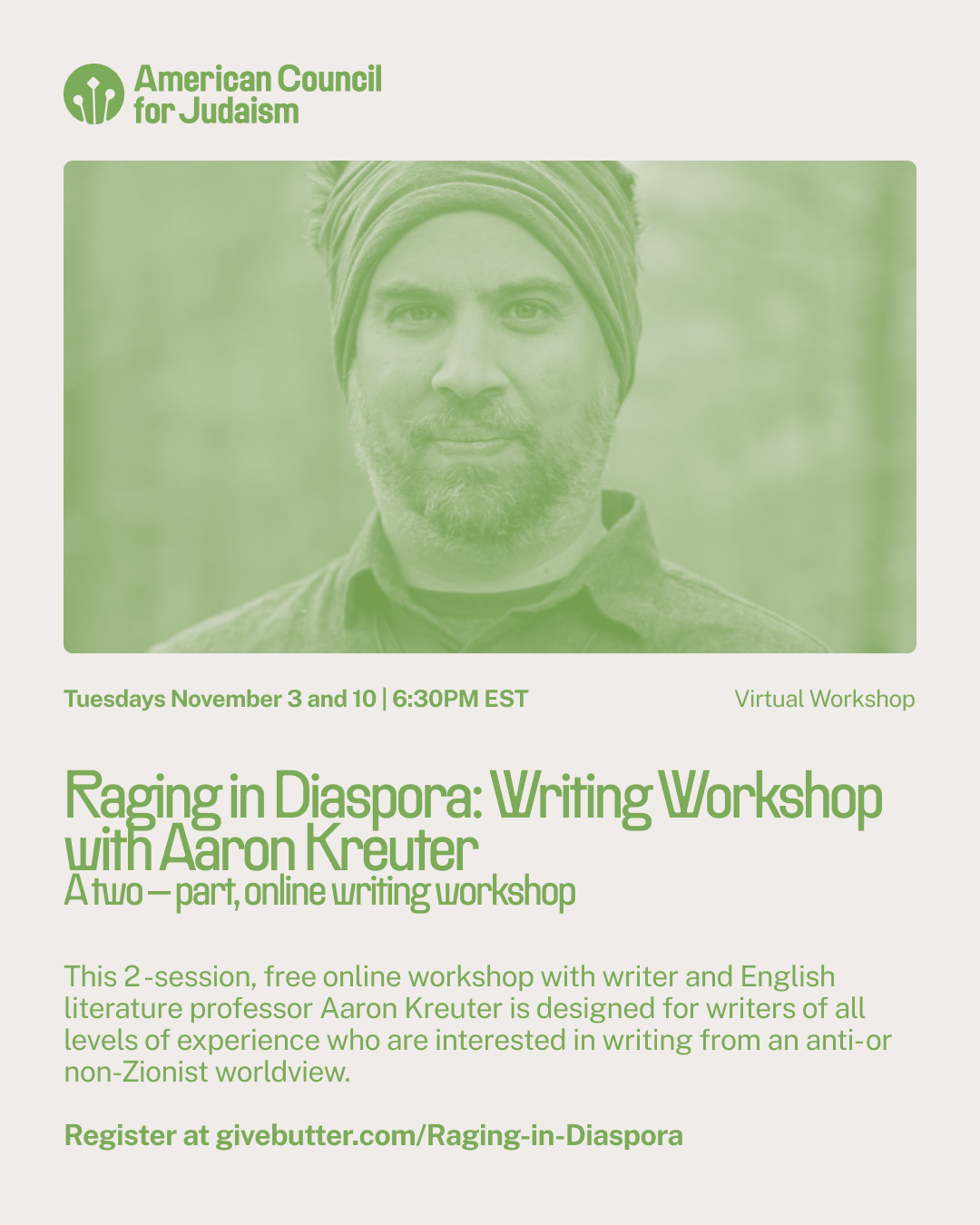
Raging in Diaspora: Writing Workshop with Aaron Kreuter
November 3 and 10 at 6:30pm Eastern
This 2 -session, free online workshop with writer and English literature professor Aaron Kreuter is designed for writers of all levels of experience who are interested in writing from an anti- or non-Zionist worldview. Split over two weeks, the workshops will incorporate reading and discussion of Jewish anti-Zionist writing, writing prompts and exercises, and a generative writing session, where participants will have time to write fiction, non-fiction, or poetry, as well as time to share their work with the group.
Learn More
- Education Series
- Streaming
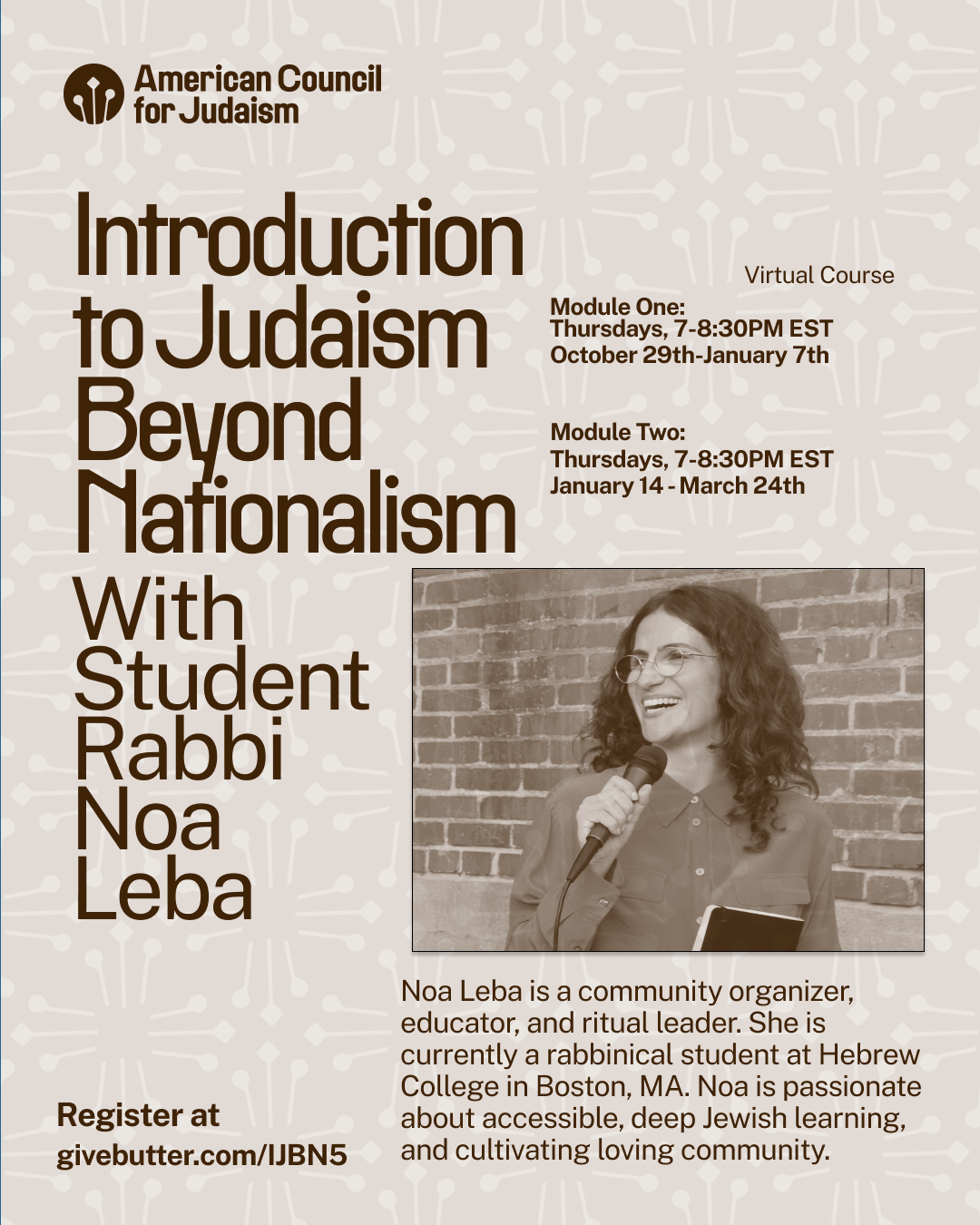
Introduction to Judaism Beyond Nationalism with Student Rabbi Noa Leba
Introduction to Judaism Beyond Nationalism is a broad-stroke survey of Jewish life, culture, belief and non-belief, and the major ideas that have shaped Jews and Judaism across time. The course offers participants a grounding in the practices, philosophies, and expressions of Jewish life from the ancient world to the present.
Learn More
- Education Series
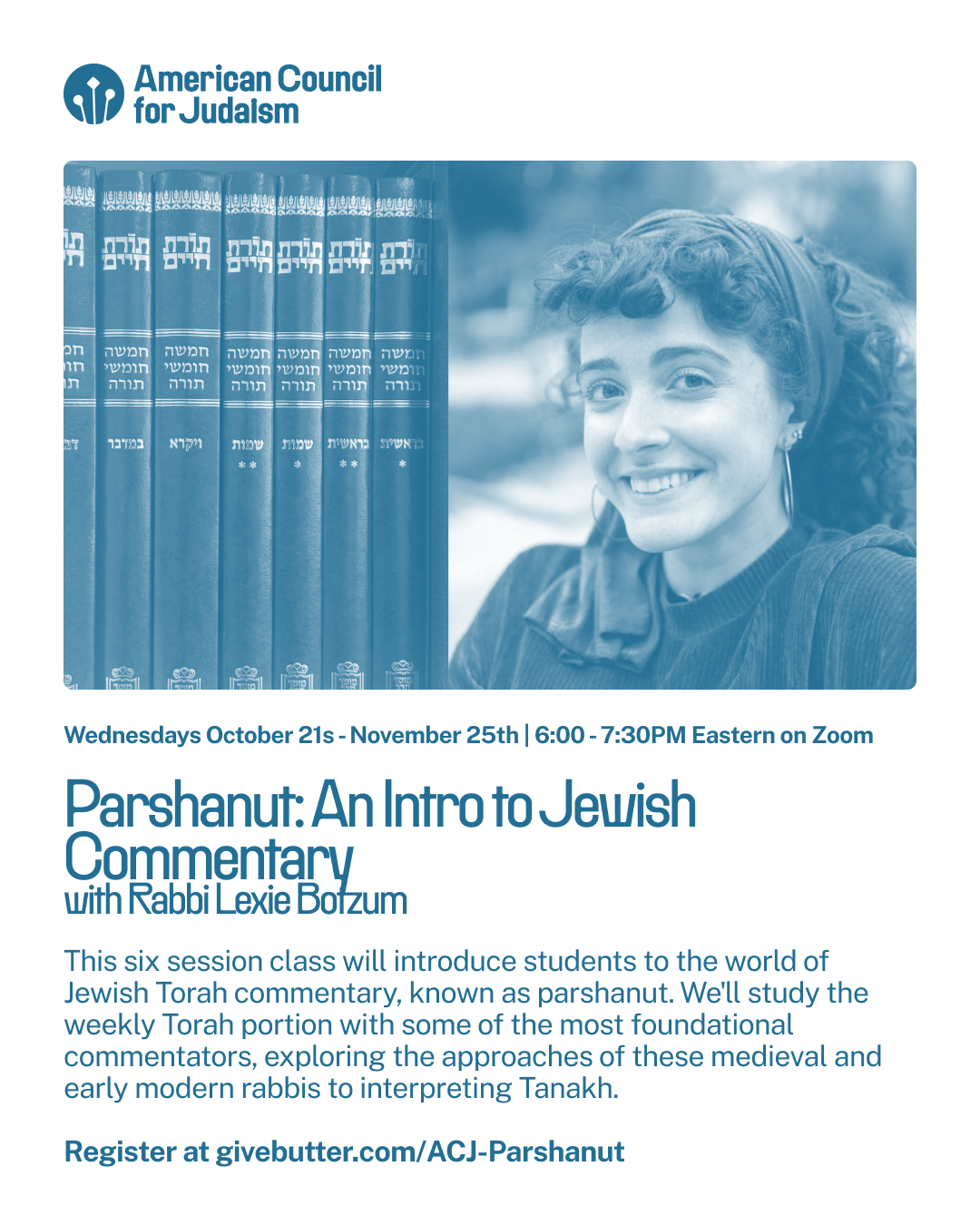
Parshanut: An Intro to Jewish Commentary
Parshanut: An Intro to Jewish Commentary
Wednesdays at 6:00-7:30 PM EST October 21st - November 25th
This six session class will introduce students to the world of Jewish Torah commentary, known as parshanut. We'll study the weekly Torah portion with some of the most foundational commentators, exploring the approaches of these medieval and early modern rabbis to interpreting Tanakh.
Learn More